

Guest post by Recorra South East.
The UK produces half a million tonnes of coffee grounds a year. Most of these end up in food waste. While on the surface this works – coffee grounds are organic waste – this is not the best solution. Here, we will break down why food waste and coffee grounds should be separated: there are far more sustainable and circular options for spent coffee grounds.

Why Separate Coffee Grounds From Food Waste?
Food waste recyclers use anaerobic digestion (AD) to break down food waste. This is a process where microorganisms break down organic waste in sealed tanks where there is no oxygen. This creates biogas, which can be used for renewable energy, and digestate, a nutrient-rich material that can be used as fertiliser.
Sending food waste for AD is important because it reduces the amount of organic waste going to landfill, where it can leak methane into the atmosphere on decomposition. Methane is 23 times more potent than carbon dioxide, so preventing methane production from landfills is an obvious and simple choice to help slow climate change.

But during AD, coffee grounds sink to the bottom of the digester equipment because they are heavy and dense. Once at the bottom, they form a thick sludge which needs to be cleaned out from recycling equipment every few weeks. Having to pause the recycling process introduces inefficiencies which reduce the environmental benefits of recycling food waste.
In other words, while technically acceptable, mixing coffee grounds with food waste fails to maximise environmental impact and resource recovery. A lot of businesses are unaware of this hidden challenge. It’s especially important for businesses in the hospitality industry to be made aware of this as food waste and spent coffee grounds make up so much of their waste footprint.
Turning Spent Coffee Grounds into Something Exceptional
While spent coffee grounds can be sent for AD or composting, they must be kept separate from general food waste. In fact, this is where most waste service providers send coffee grounds. Recorra, however, does things a little differently. We work with a select group of partners to create high-value innovative products from our customers’ spent coffee grounds.
Realizzato Coffee Liqueur
Believed to be the first new kind of alcohol created in the last 400 years, Realizzato is made by breaking down spent coffee grounds so they release fermentable sugars. Then, impurities are removed through a triple-distillation method which preserves the aromatic coffee flavour.
Realizzato enables hospitality clients to close the loop on recycling. Coffee grounds collected from Recorra clients can be sent to the Murray & Yeatman Distillery for Realizzato liqueur production. Then the same restaurants, bars, hotels, etc. can buy back the liqueur made from their coffee grounds for consumption.
The Murray & Yeatman Distillery is located in Sussex, making this coffee liqueur not just a circular economy solution, but also a local one, lowering the carbon impact even further.
Flybox: Food for Livestock
Recorra also supplies spent coffee grounds to Flybox. This organisation feeds the grounds to black soldier flies. Amazingly, these flies are turned into protein-rich animal feed.
This helps reduce farmer reliance on soy-based feeds, which are frequently linked to deforestation. Moreover, soy is often imported from abroad, leading to more emissions. Through this system, hospitality businesses in the South East not only have an opportunity to close the loop by buying produce from farmers who feed their livestock Flybox animal feed, but can also help lower the emissions needed to produce food in their local area.
Envar: Soil Enhancers
Recorra also partners with Envar. They turn spent coffee grounds into soil-enhancing pellets, eco-fuel logs, and other innovative circular solutions. Hospitality businesses, especially hotels with landscaping teams, can close the loop by purchasing their coffee-infused soil improver to enhance their green spaces.
How Coffee Grounds Recycling Increases Recycling Rates
So, keeping coffee-ground sludge out of AD equipment isn’t the only benefit of having a separate coffee ground recycling service. It is also a quick and simple way to boost recycling rates.
Spent coffee grounds are already separated inside coffee machines, so businesses don’t have to change employee behaviour to incorporate a new recycling stream. As a simple addition to existing recycling services, it can also be introduced with minimal operational change. For hospitality businesses, this means avoiding extra stress and disruption to a well-oiled environment when they are already accommodating customers.
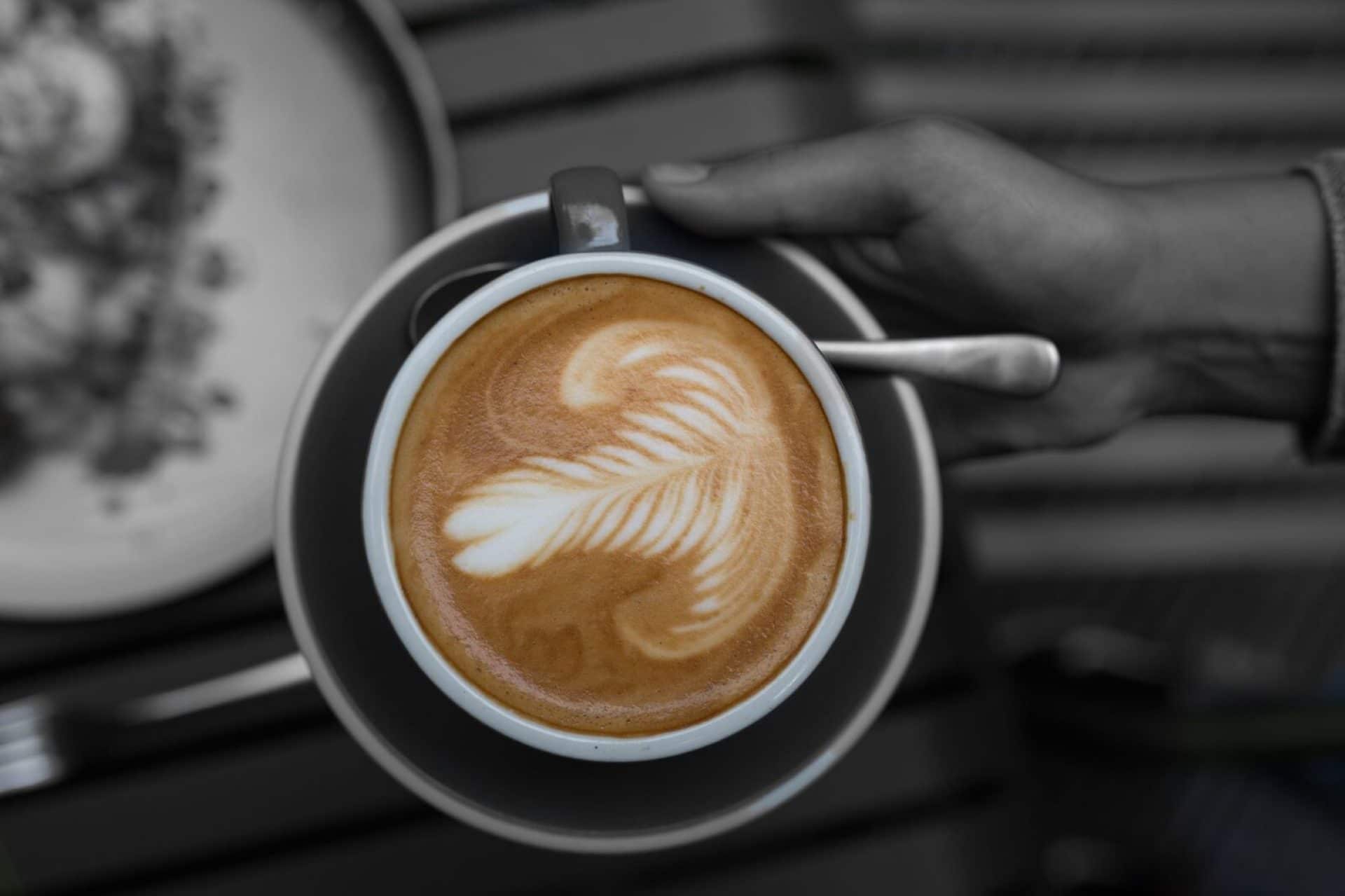
Moreover, swapping a food waste bin for coffee grounds bin doesn’t require extra space. This is especially useful for smaller restaurants, cafes, and kitchens which have limited floor space.
Start Recycling Your Coffee Grounds
Customers increasingly care about and want the businesses they use to be more sustainable and socially responsible. Adding a closed-loop coffee grounds recycling service openly demonstrates businesses’ efforts to make their operations more sustainable.
If you are ready to boost your recycling rates and get involved in the circular economy while supporting local businesses, reach out to Recorra to start recycling your coffee grounds.
