
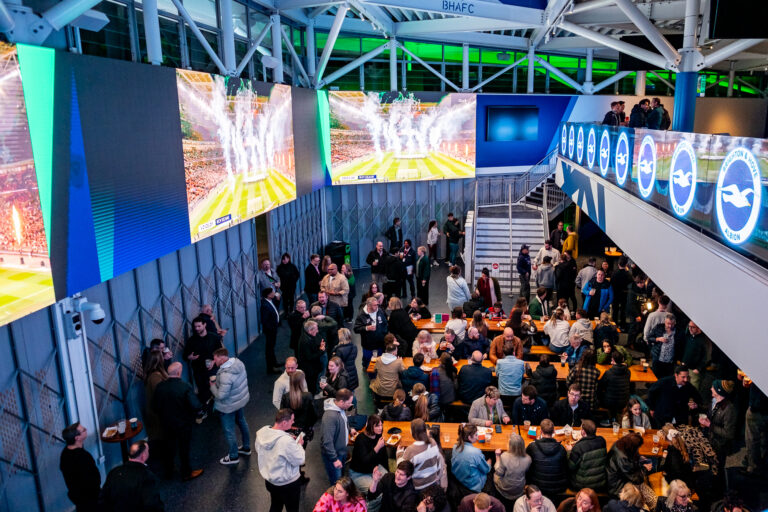
Hosting the FIFA World Cup 2026 across North America (USA, Canada, and Mexico) completely rewrites the playbook for Brighton’s hospitality industry. Because the tournament is taking place 5 to 8 hours behind us, daytime afternoon matches are a thing of the past. Instead, the city faces a wave of late-night football, shifting the pressure entirely to evening operations.
From a hospitality business owner’s point of view, this unique tournament structure provides plenty of food for thought, bringing a highly unpredictable mix of opportunities and headaches. These are England’s fixtures for the FIFA World Cup:
England vs Croatia, June 17th 10pm
England vs Ghana, June 23rd, 10pm
Panama vs England, June 27th, 11pm
1. The Late-Night Kick-Offs: The Evening Shift
With matches stretching across the North American continent, television schedules will feature an unprecedented number of evening and late-night fixtures for UK viewers.
-
The Prime-Time Window: The sweet spot for Brighton venues will be the 7:00 PM and 10:00 PM UK slots. This means major group games – including England’s high-stakes matches – will air during peak evening drinking and dining hours.
-
The Late-Night Graveyard Shift: West Coast matches coming out of cities like Los Angeles or Seattle will kick off at 1:00 AM or 2:00 AM UK time, stretching standard pub operations into the early hours of the morning.
- Here are the venues across Brighton and Hove currently set up to host FIFA 2026 World Cup games.
Because matches don’t kick off until late afternoon or evening, Brighton’s lunch trade will remain entirely unaffected. Furthermore, the “vampire effect” – where football completely drains the city’s restaurants – won’t be quite as severe this time around.
Because the games air so late, casual diners and those looking to avoid the football altogether can easily enjoy a normal evening meal before the chaotic late-night crowds take over the streets. Restaurant dining rooms should remain relatively steady, while pubs bear the brunt of the tournament energy.
3. The Identity Crisis: Sports Bar or Summer Haven?
Because the tournament runs deep into June and July, it clashes directly with Brighton’s peak summer tourist season. This forces pub owners into a difficult strategic dilemma regarding their premium outdoor areas:
Do you pivot completely to a sports bar, or do you retain your usual summer crowd?
Installing massive screens in a beer garden will undeniably guarantee packed out, high-volume matchdays when England plays. However, it completely alienates casual summer tourists, families, and locals who just want a quiet pint of craft cider or a glass of rosé in the sun. Striking the right balance across a month-long tournament without isolating your core demographic is a delicate tightrope walk.
4. The Unpredictable Weather and Staffing Headache
Predicting footfall and organising rotas during a summer World Cup is notoriously difficult, but the North American time zones add another layer of complexity.
-
The Staffing Strain: Finding staff willing or legally permitted to regularly work until 3:00 AM to cover late-night matches and post-game cleanups is a massive hurdle, especially in a tight hospitality labour market.
-
The Weather Wildcard: If the UK experiences a persistent summer heatwave alongside the tournament, forecasting stock and staff becomes a guessing game. A beautiful, scorching day might drive thousands to Brighton beach all afternoon, only for them to violently pack out the pubs at 9:00 PM when the match begins – or alternatively, abandon the high street entirely to watch the game at a backyard barbecue with supermarket beers.
For Brighton’s operators, navigating this tournament isn’t just about rolling out a television; it’s about calculating risks, managing capacity, and deciding exactly what kind of venue you want to be when the sun goes down.