One of Sussex’s Most Beautiful Villages
Alfriston’s main drag is a peaceful pandemonium of ancient house fronts leaning over the high street. Tudor, medieval, Stuart, Georgian and Victorian buildings rub shoulders as closely as rush-hour strap-hangers on a commuter train. The only harmony binding them is the passage of time: just about every stage in English architecture is here. It’s no surprise that the first property ever bought by the National Trust, back in 1896, is here in Alfriston: the 14th-century Alfriston Clergy House.
With its old-world prettiness, fashionable hotels, bars and restaurants, and its setting in peak downland by the River Cuckmere, Alfriston is surely, in terms of beauty, the Venice of the South Downs.
What You’ll Love
- A beautiful historic hotel in the heart of Alfriston
- Refined cooking that goes beyond classic country hotel dining
- Generous portions and imaginative seasonal menus
- Elegant bedrooms full of period character
- One of Sussex’s prettiest weekend escapes
An Oasis of Calm and Refinement
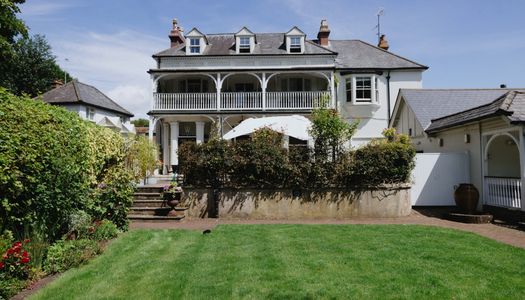
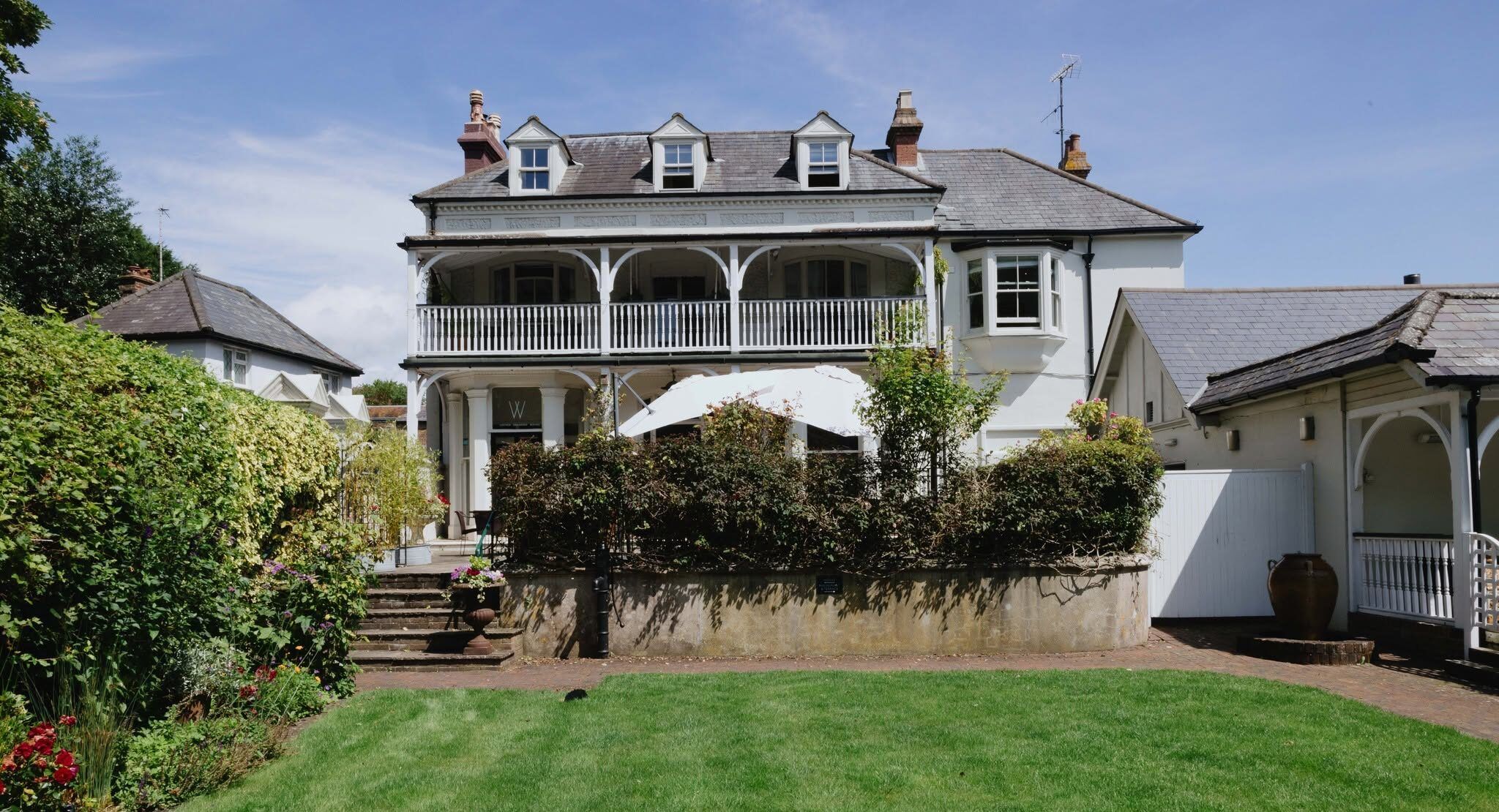
Wingrove House is one of the highly individual buildings that make up the high street. The Colonial-style house was built for racehorse trainer Harry Batho in 1870, a time when only a cad or an arriviste would build a Colonial house in an English village. It has settled into refined elegance since then, and more recently subsumed the row of cottages next to it for extra accommodation.
The dining room, bar, reception, sitting room and so on are in the main building, which runs out onto terraces and a garden backing onto the Church of Saint Andrew. It’s the sort of idyll that would mollify the hardest of spirits. You immediately think of a Richard Curtis romcom. Truthfully, I think it was raining when we arrived. We didn’t even notice.
Room to Stay
Our huge bedroom was set at the top of its own staircase under the apex of one of the very old cottage roofs, but access is seamless, as everything has been unified internally. Like all of the older parts of the building, its ceiling was a fascination of curved, ancient English oak beams, with a wide (5ft 6in) comfortable bed, tea and coffee facilities, a TV, and a big en-suite bathroom with a walk-in shower and a stand-alone bath.
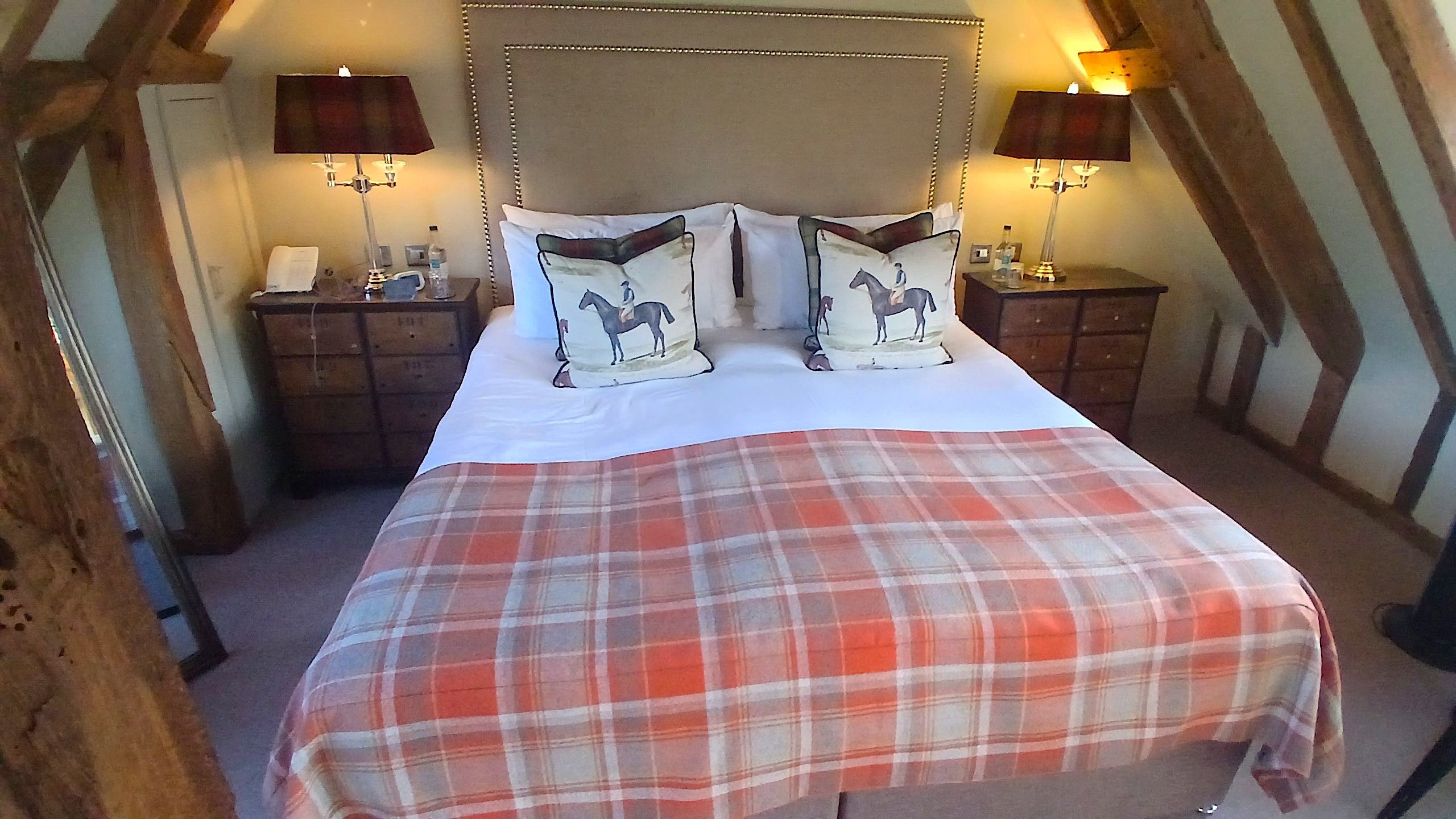
The windows on one side give a view of that wonderful high street, the other looking out to the garden and church. There are, in life, only two sorts of hotel room: the ones you use functionally and ones like this; ones you want to stay in, hiding from the real world forever.
A Sense of Occasion
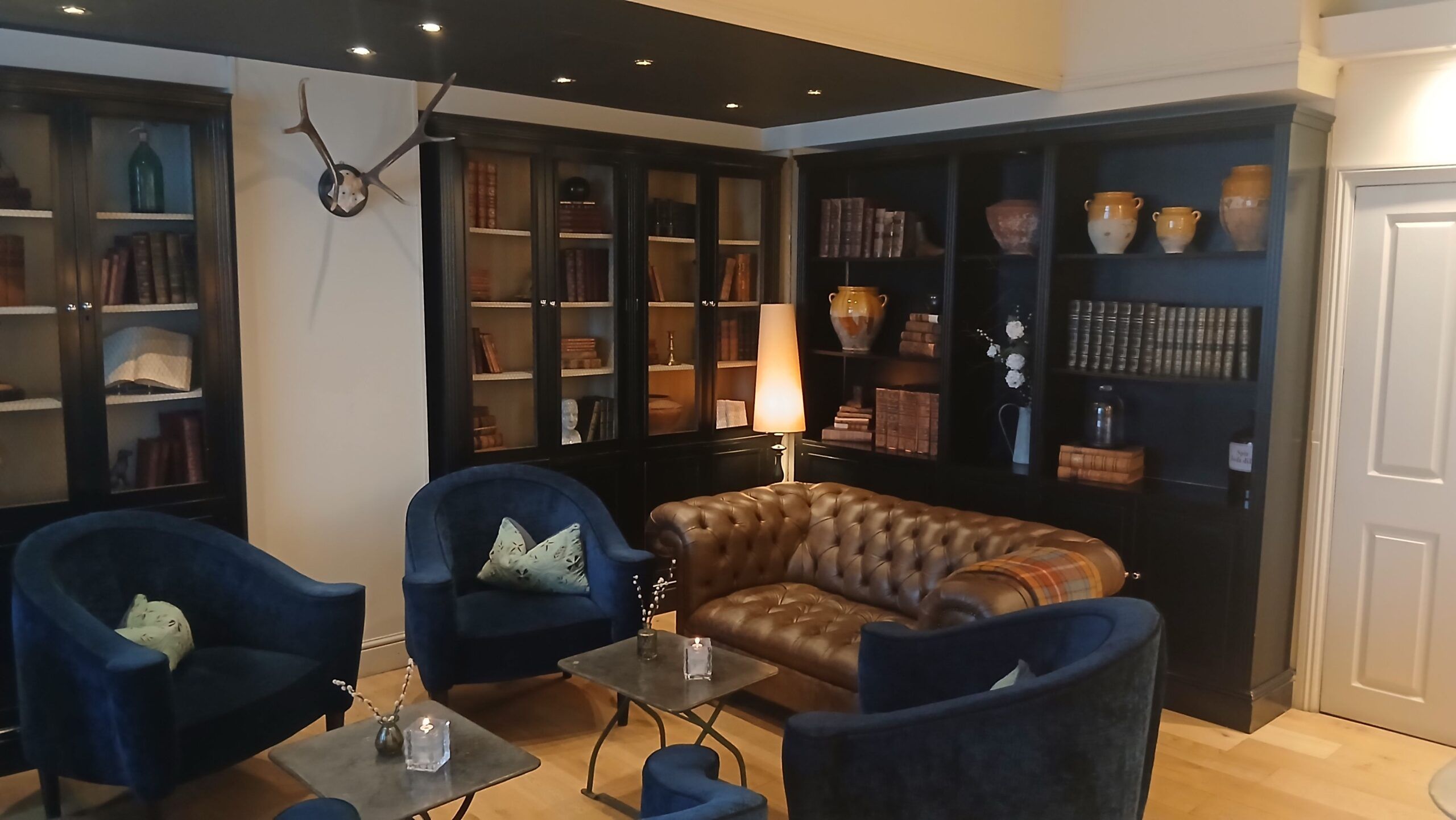
Dinner was served in a large dining room, with the option of an outdoor terrace; it was a little windy on our visit, so we sat inside. This is a dining room with just the right whiff of formality; enough wow factor to make it a place for occasions.
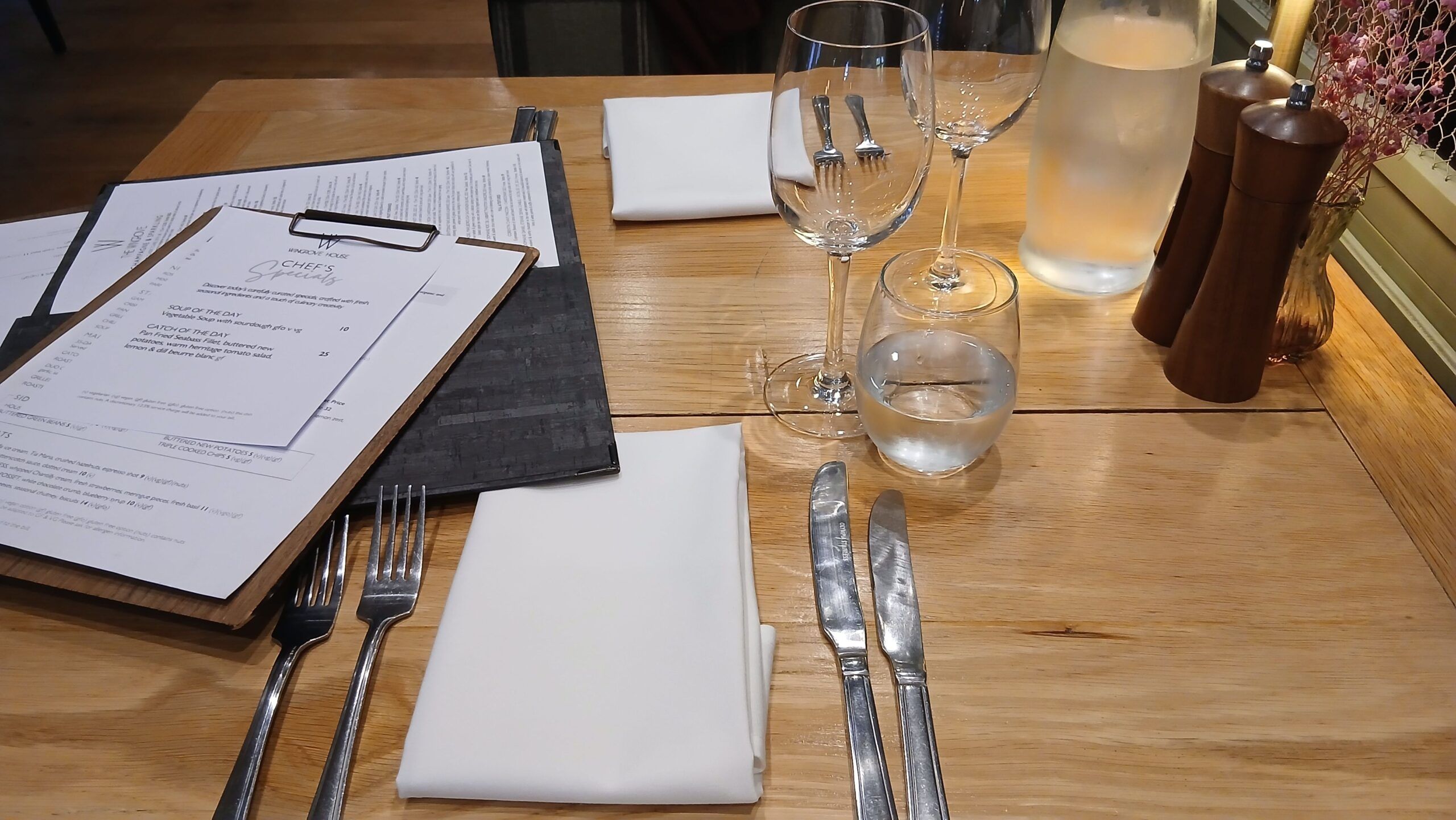
The menu gave little hint to the refined drama that was about to unfurl, but there were some good omens from the get-go, including heated plates (it’s a wonder how many restaurants will cook great food then let it cool instantly on the plate) and the provision of salt and pepper, indicating a respect for the diner’s wants.
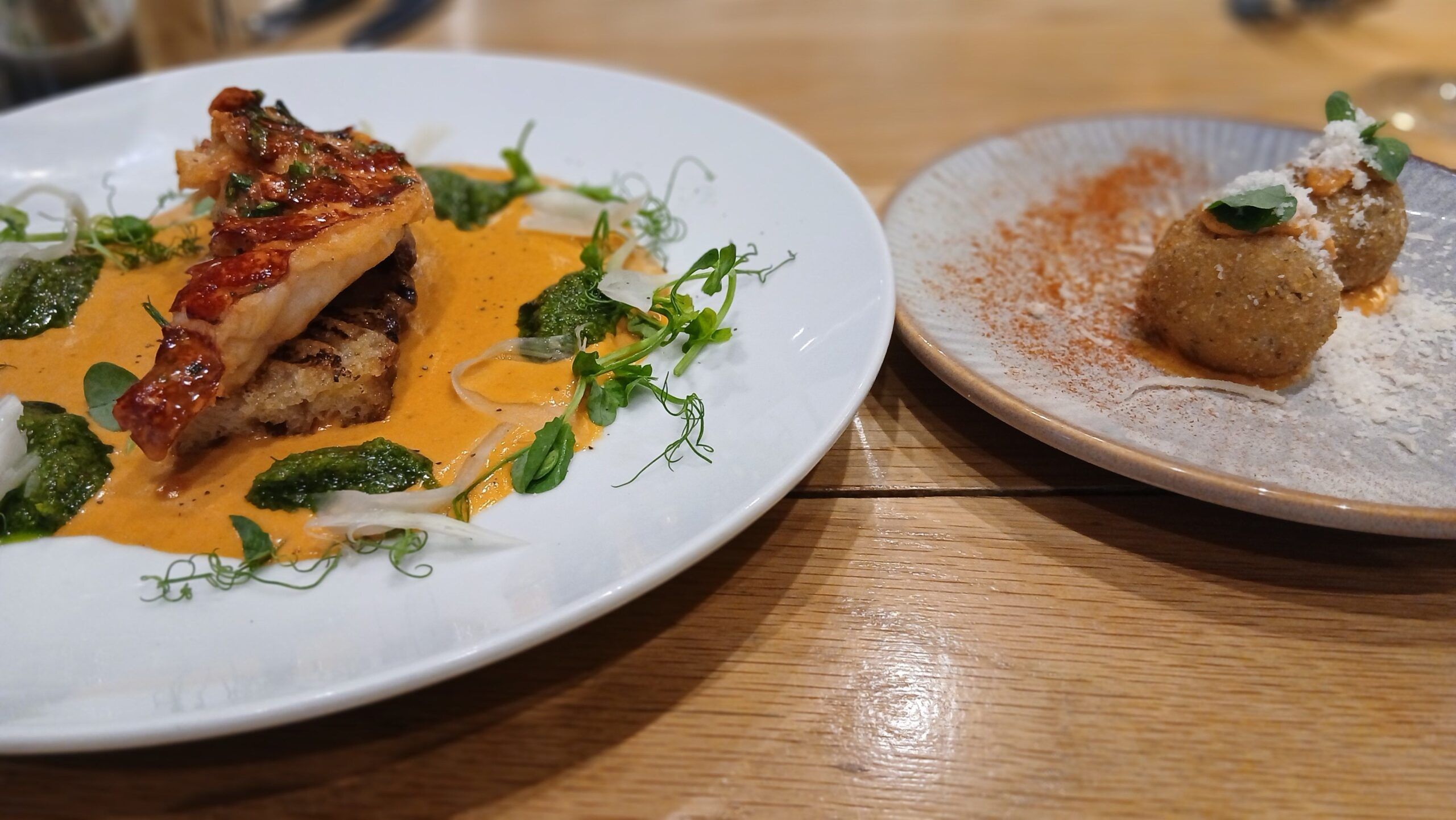
We chose starters of scallops and asparagus, the last of the season. But first, a surprise, which came in the form of a lobster tail on focaccia, dressed in an orange crab sauce, and some delicate cheese croquettes. Clearly, the chef has a thing for lobster, crab and langoustine, as we were to discover. These two treats are not on the menu, but they might be soon. The house Chablis was working hard, cutting through the richness as smoothly as a destroyer’s prow cleaving its way through the sea (if fancy permits!).
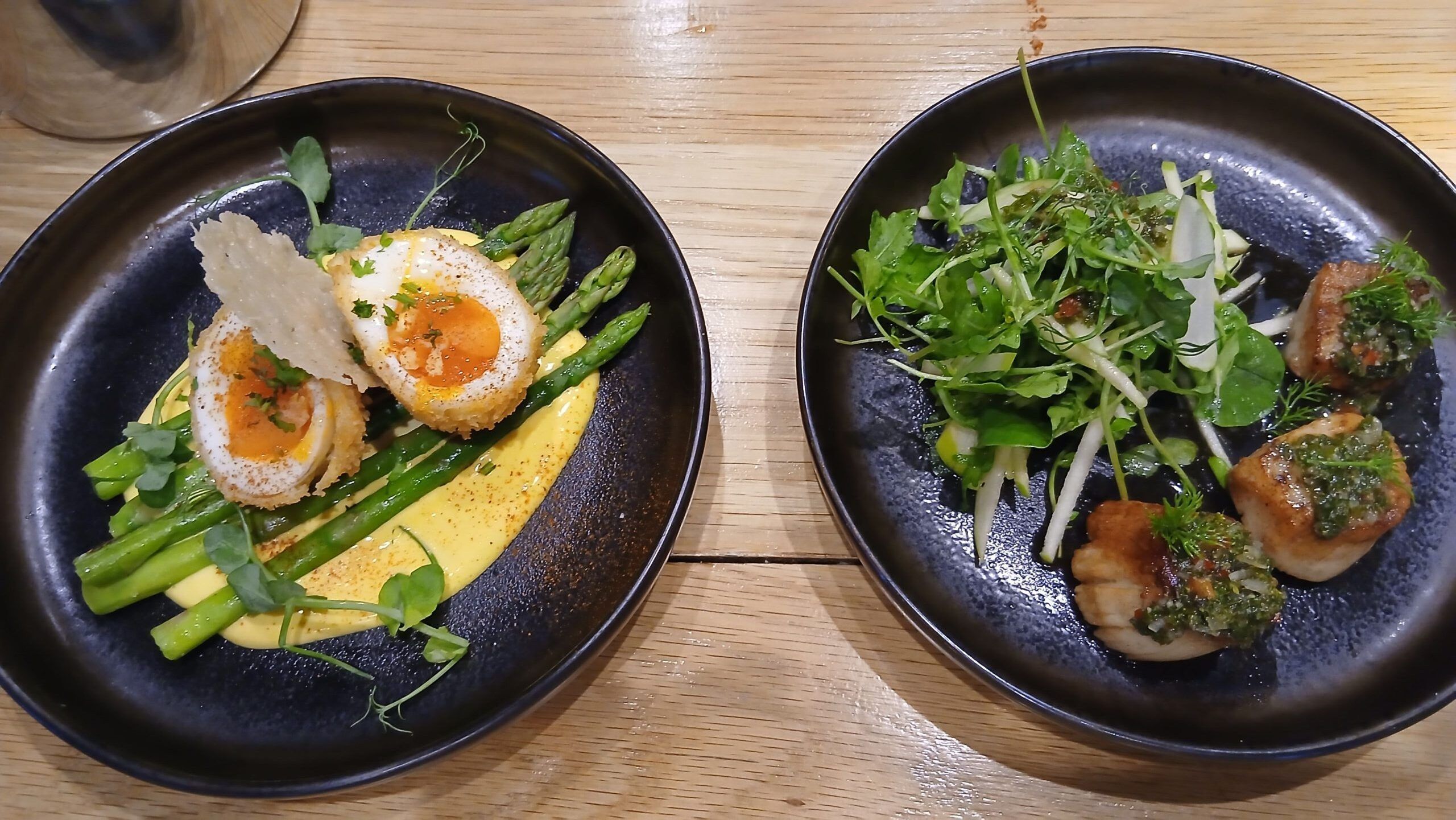
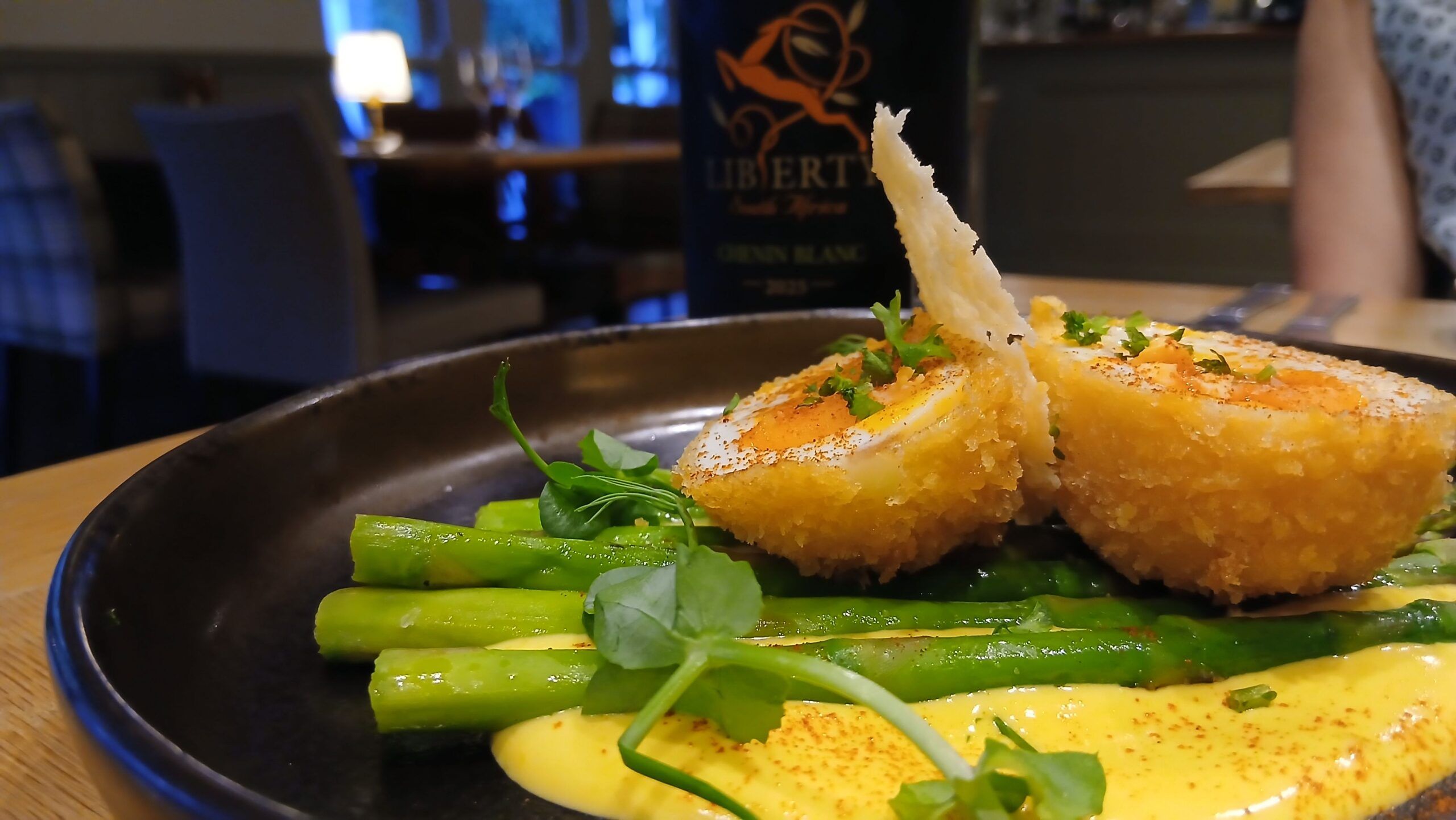
The scallops came with a simple green apple and pea shoot salad (very nicely dressed, incidentally) and a chimichurri salsa: sharp, willing accomplices to the meaty sweetness of the scallop. The asparagus (blanched for 30 seconds, thrown into an ice bath, then grilled on the fiercest heat for 30 seconds) was bright green and perfectly crunchy, and served with a classic Hollandaise sauce and a soft-boiled egg wrapped in a net of cooked pecorino. This lacks Parmesan’s rennet, making it a great vegetarian dish.
Fit for a King
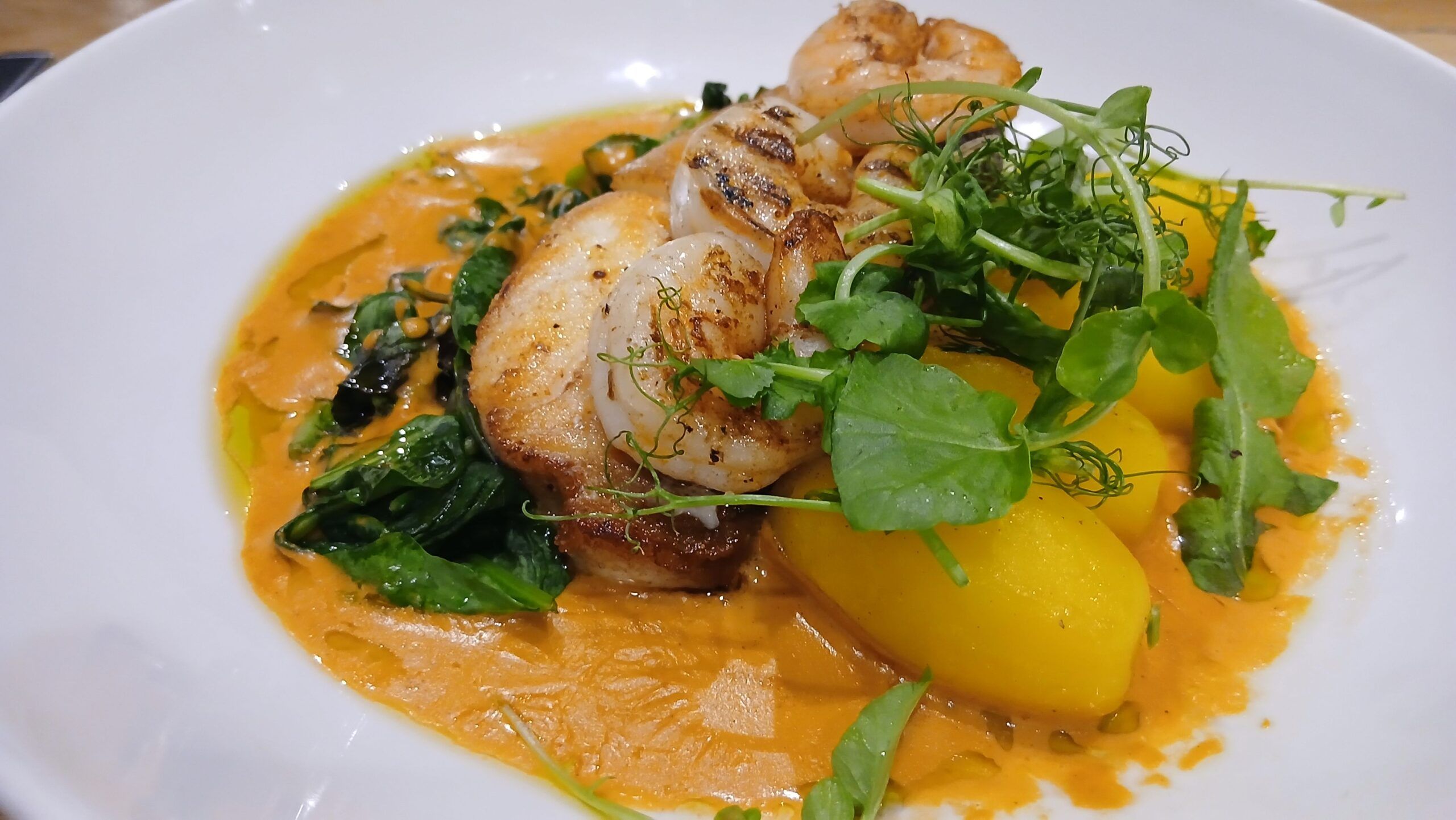
By this time, we were asking who the chef was, as clearly there was someone of proper zeal in the driving seat. Our main courses were halibut and duo of pork. Halibut, the king of the flatfish, has always been a high-budget favourite with chefs and diners, with its thick, meaty, close-grained slabs: chefs love to get jiggy with the king, and this example was served the classic way: white side up, and in this instance topped with prawns and covered with a velvety sauce based on a lobster bisque, enriched by brown crab meat (identified by my wife).
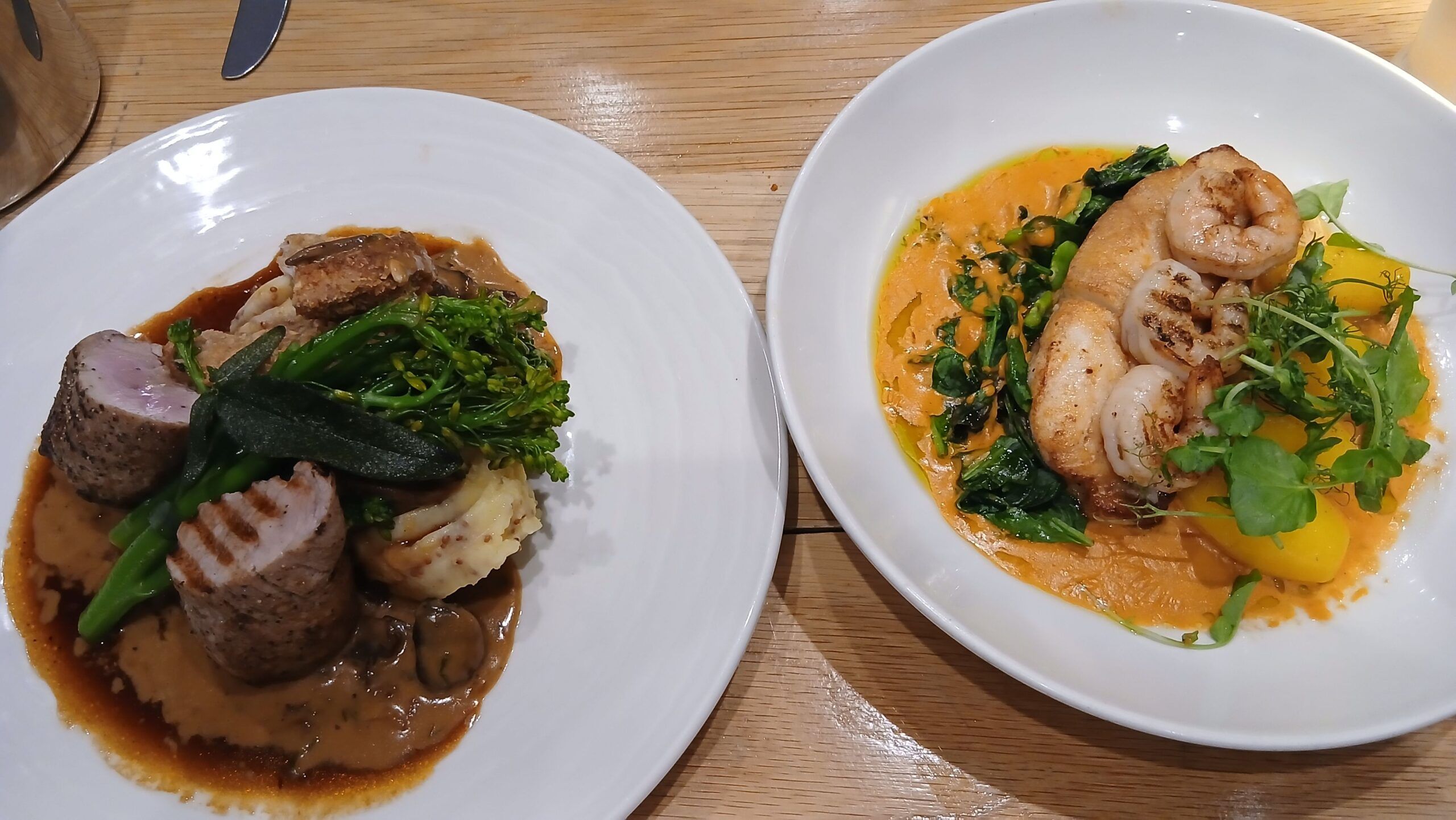
The duo of pork (tenderloin and escalope) was a nice contrast: meaty, and not in the slightest bit dry. The sauce on this one was mushroom- and sage-based, a rich brown and deeply savoury. No doubt some wine (or even port) was harmed in its making. It’s worth mentioning here that portions are very generous, and that is just a wonderful, wonderful thing in this world where quality has usurped quantity. We want food, glorious food, and plenty of it!
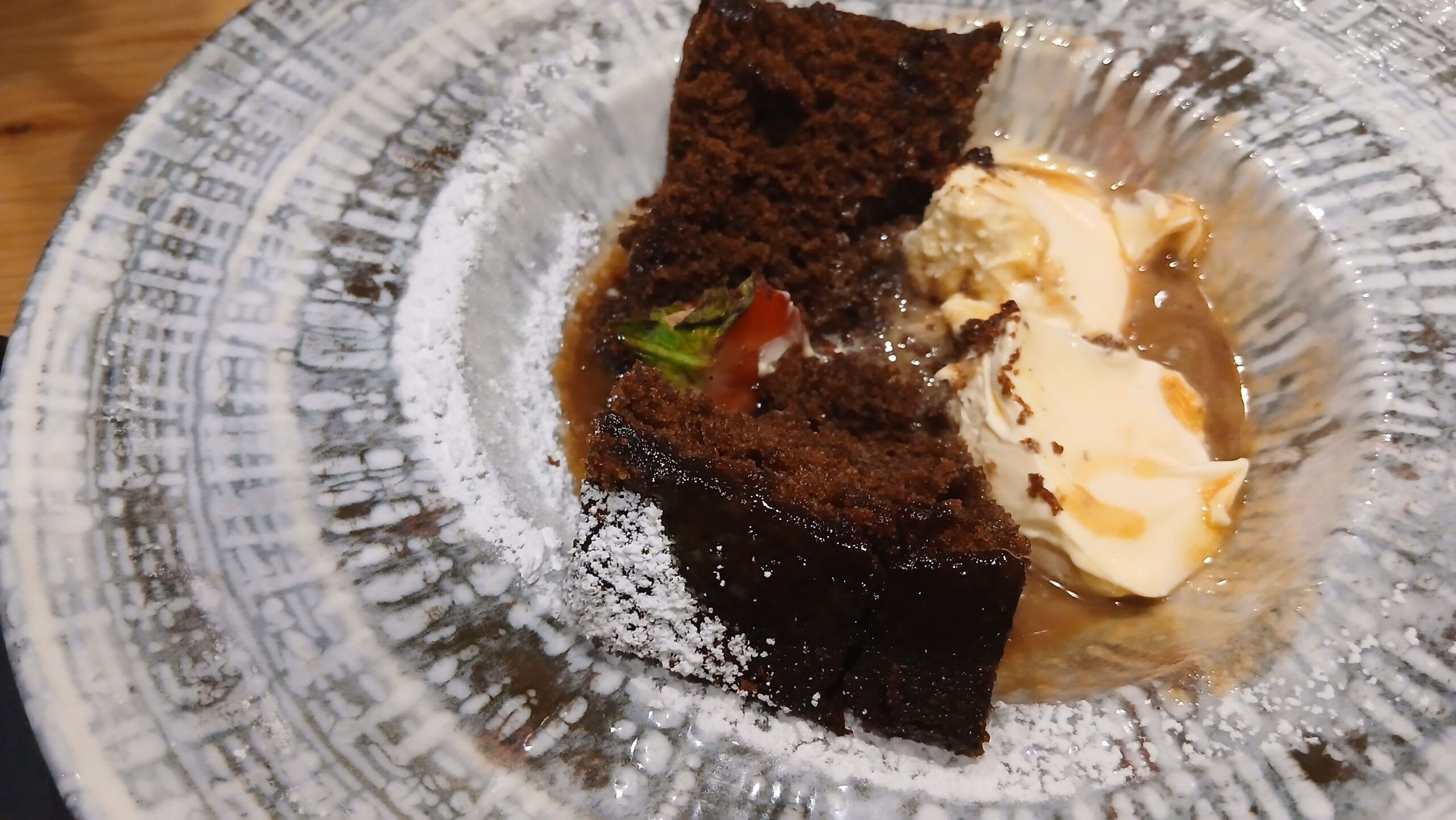
My wife was flailing slightly now, so I had rather more than my half share of pork (my wife and I usually share everything with perfect parity; in other words, we count prawns and cut scallops in half). By this point, pudding was going to be a stretch, but we chose lemon posset and ginger sponge with butterscotch sauce and clotted cream. It’s a curious fact of English life that puddings are always good, possibly the best, so I’ve nothing to say about these, other than the sponge is not a dish for the weak. It’s a dish for heroes.
A Chef to Watch
At the end of it all, we got to meet the man who made it happen: Chef Jacob, who has been there for three years. His philosophy can perhaps be summed up as pushing constantly at boundaries, not with a bulldozer, but with a steady hand. One of his maxims is to stay ahead of the keen home cook. When you come to Jacob’s table, you’ll be fed in a way that you’d be very hard pushed to replicate at home. The soft-boiled egg wrapped in a cage of melted pecorino is a good example of something you or I will not be making any time soon. The specials here (locally-caught sea bass with tomato salad) change weekly, and the menu evolves every month.

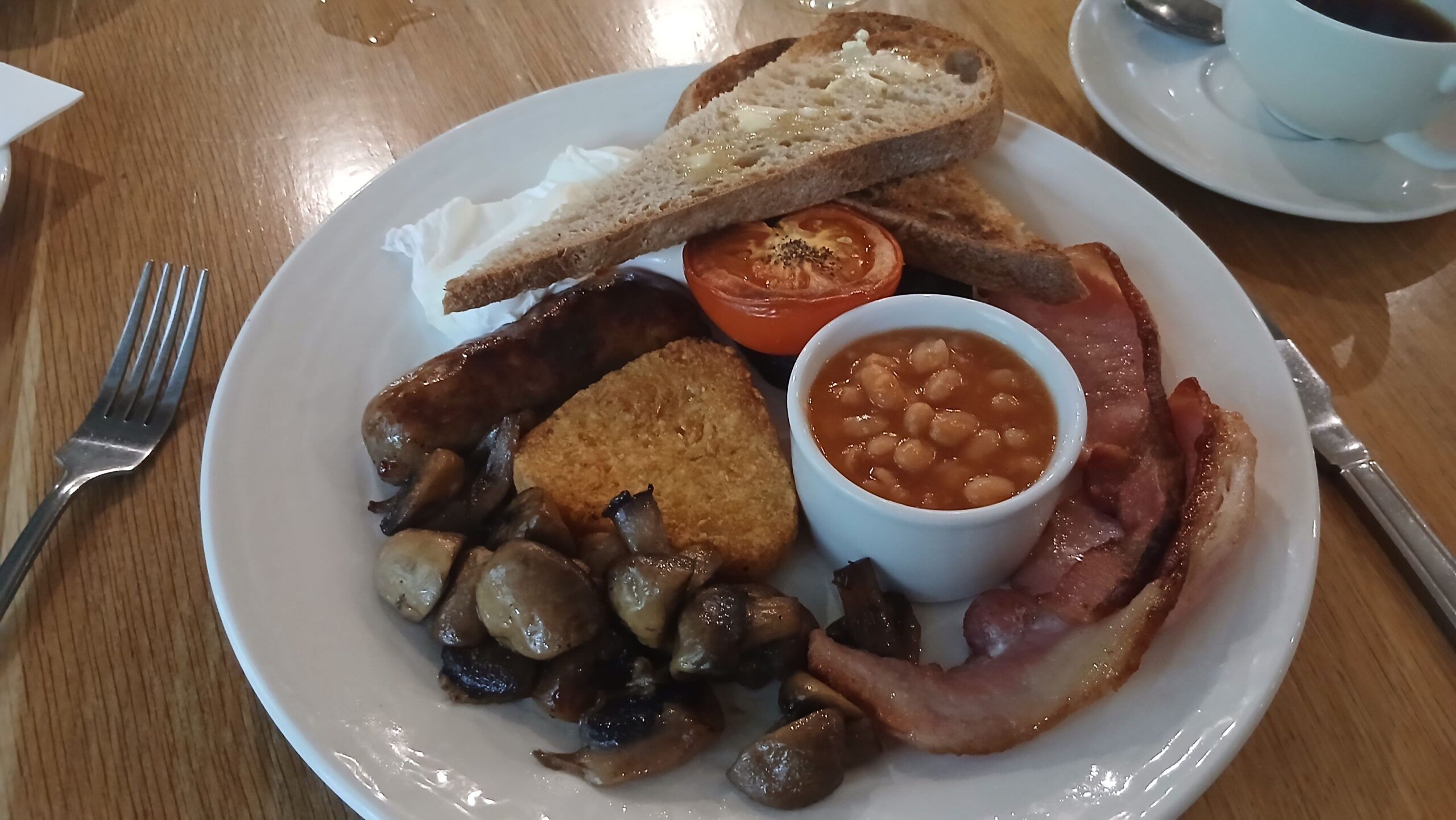
Breakfast the next morning was an oasis of calm: subdued chatter, rustling papers, everything you’d want in an English country hotel breakfast, including, for me, the agony of choosing between kippers and a full English. The stolid charm of the latter won, as it always does.
When Jacob sent over a bowl of the prawn starter, the ‘one that got away’ the night before – gambas crostini in a langoustine and white wine sauce – I ate that too. It’s a dirty job, but someone’s got to do it.
Wingrove House has ‘idyllic weekend’ written all over it, and it was quietly busy, even on a Monday night in term time, no doubt partly because of its rave reviews online. It would be a good place for a celebratory dinner too; it will impress even the jaded.
It’s easy to picture it in winter: warm wooden floors, softly gleaming glasses, a log fire, rain on the roof… It would be a great place to come if you’re tired, hurting, or just sick of the 21st century. Once you pass through the front door, you’re luxuriously, deeply safe. No one can get you here.